From Forgotten Trips to Cherished Memories: How Booking Apps Quietly Capture Life’s Best Moments
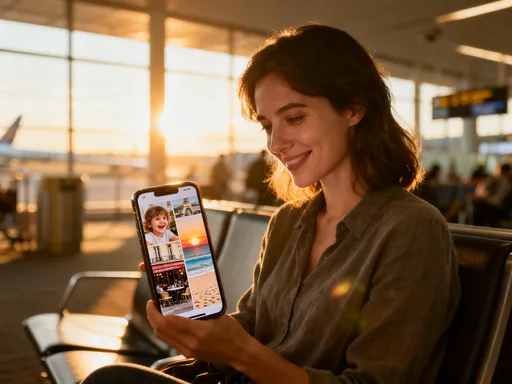
Remember coming back from a trip, only to realize you barely remember the little moments—the first sip of coffee in Paris, your child’s laugh at the airport, the sunset from your hotel balcony? I felt the same, until I noticed something unexpected: the apps I used to book travel weren’t just tools—they began saving stories. No extra effort, no complicated setups. Just seamless moments captured through the tech I already trusted. This isn’t about fancy features—it’s about how quiet, thoughtful design can turn ordinary trips into lasting memories.
The Trip That Faded Too Fast
There was a weekend trip to the coast a few years ago that, at the time, felt magical. The air smelled like salt and wildflowers. My youngest kept spotting dolphins from the bluff trail. We ate grilled fish at a tiny restaurant with no name, laughing as we tried to pronounce the local dishes. I remember thinking, This is the kind of weekend we’ll talk about for years. But when I tried to recall it six months later, almost nothing stayed. The photos were scattered across my phone, some blurry, others never even opened. The receipts? Deleted. The feelings—warm, carefree, connected—had slipped through my fingers like sand.
It wasn’t that the trip wasn’t meaningful. It was that I had no real way to hold onto it. I wasn’t alone. So many of us collect experiences like souvenirs, but we don’t always know how to keep them alive. We snap photos, but rarely look at them again. We scribble notes, but lose them. I started wondering: what if the tools we already use every day—like the apps we open to book flights or hotels—could help us remember better? Not by doing more, but by doing something quietly, without fanfare.
That’s when I began paying attention to my booking app. Not just for travel planning—but for what it showed me after the trip ended. I noticed I kept opening it, not to book anything new, but to scroll. To see where I’d been. And slowly, I realized: this little app, the one I used to reserve a room or check in online, was becoming something more. It was becoming a keeper of my life’s quiet chapters.
Booking Flights, Saving Stories
We all think of flight apps as practical tools—digital boarding passes, seat maps, delay alerts. But over time, I started seeing mine differently. One rainy afternoon, feeling nostalgic, I tapped the “Past Trips” tab. What I found wasn’t just a list of flights. It was a timeline of my life. There was the red-eye to Denver the week before my sister’s wedding—how nervous I was, how I spilled coffee on my dress at the gate. There was the early flight to Portland when my daughter, then six, whispered, “I love travel days,” as we watched the sunrise from 30,000 feet.
The app didn’t ask me to write a journal entry. It didn’t prompt me to upload photos. It simply remembered what I did. And in doing so, it gave me back moments I hadn’t realized I’d lost. Each flight detail—departure city, arrival time, even the length of the layover—became a doorway. I’d see “Flight: SEA to SFO, 8:15 AM” and suddenly remember the book I was reading, the playlist I made for my son, the way the fog looked over the bay as we descended.
That’s when it hit me: the act of booking wasn’t just about getting from point A to B. It was a record of where I chose to go, who I traveled with, and what mattered at that moment. The app wasn’t trying to replace memory. It was supporting it—like a quiet friend who says, “Hey, remember this? You were happy here.” And the best part? I didn’t have to do anything extra. I just lived my life, and the app kept track.
Hotels That Remember More Than Just Your Room
Hotel booking apps used to be simple: search, book, check in. But lately, I’ve noticed something subtle. After I returned from a family trip to Asheville, I opened the app and saw a photo gallery labeled “Your Stay at the Mountain View Inn.” I didn’t take these photos. But there they were—the sunlit porch where we had morning coffee, the stone fireplace where we played cards, the garden path where my niece picked her first wildflower.
At first, I thought it was marketing. Just another way to sell me on the same place. But then I realized: these weren’t ads. They were memory triggers. The app had matched my stay with professional images from the property and organized them by date. Seeing that porch brought back the sound of the wind chimes, the smell of fresh biscuits, the way my mother laughed when the dog stole a muffin off the table.
What made this powerful wasn’t the quality of the images. It was the context. The app knew when I was there. It knew I’d booked a room with a view. It knew I’d stayed two nights in early October. And by quietly assembling those visuals, it helped me re-experience the feeling of that weekend. I hadn’t saved any of this in a journal. I hadn’t even told many people about the trip. But the app remembered. And in remembering, it gave me back a piece of myself.
The Quiet Power of Automated Moments
One of the most beautiful things about these memory features is how little effort they require. I’m not a professional photographer. I don’t journal every night. I’m just a mom, a traveler, someone trying to hold onto the good moments between grocery runs and school pickups. But these apps don’t ask me to be perfect. They don’t demand captions or albums. They simply notice.
A few months ago, I got a gentle notification: “You stayed here last spring.” It linked to a cozy lakeside cabin in Michigan. I hadn’t thought about that trip in months. But seeing the message, I remembered the rainy afternoon we played board games, the way my husband taught the kids to skip stones, the quiet evening when we all sat around the fire with marshmallows. The app didn’t know about the marshmallows. But it knew I was there. And that was enough.
Another time, I opened the app and saw a photo with the caption: “This was your view.” It was the ocean at dawn from a balcony in Charleston. I hadn’t taken that photo. But the moment I saw it, I could feel the cool morning air, hear the gulls, remember how my daughter said, “It’s like the sky is waking up.” These aren’t intrusive pop-ups or flashy ads. They’re soft, respectful nudges—like a friend flipping through an old photo album and saying, “Look, remember this?” And more often than not, I do. Or at least, I start to.
How to Let Technology Care for Your Memories
You don’t have to overhaul your routine to start preserving these moments. In fact, the beauty is in the simplicity. Most of these features are already built into the apps you use—they just need a little attention. Here’s what I’ve started doing, and how you can too.
First, I make sure memory features are turned on. In my booking app, there’s a setting under “Privacy & History” that allows past trips to be saved and displayed. It’s off by default for some users, so I recommend checking. Then, I add personal notes to my trips. When I book a family getaway, I’ll type a quick line like “First trip with Grandma” or “Celebrating 20 years of marriage.” These aren’t long entries—just anchors. Later, when the app shows me the trip, that note brings everything back.
I also use shared itineraries differently now. Instead of just sending flight details to my sister, I include little extras: the name of the ice cream shop we found, the park where we flew kites, the street musician who made the kids dance. When we all get the reminder later, it’s not just logistics—it’s a shared memory. And for solo trips? I treat them like letters to my future self. A note like “Needed this break” or “So proud of how I handled the work call from the hotel lobby” becomes a gift to the me who might forget how strong I was in that moment.
Beyond Photos: Capturing the Feel of a Place
Memory isn’t just about what we see. It’s about how a place makes us feel—the sound of rain on a rooftop, the taste of a local dish, the playlist that played during a road trip. What’s surprised me most is how apps are starting to capture that, too.
After a beach vacation last summer, I got an email from my booking platform with a subject line: “Relive your coastal escape.” Attached was a curated local music playlist—surf rock, soft acoustic tunes, songs with ocean sounds in the background. I pressed play while folding laundry, and suddenly, I could feel the warmth of the sun, the grit of sand in my sandals, the way my son screamed with joy when the wave knocked him over. The app didn’t record that scream. But the music brought it back.
Some platforms now save weather data from your travel days. I saw that our mountain hike in Colorado was sunny with a high of 72°F—and instantly remembered how light the air felt, how green the pines were. Others include restaurant reservations in your trip history. Seeing “Dinner: The Blue Lantern, 7 PM” made me smile because I remembered the garlic bread, the candlelight, the way my daughter said, “This is the best meal ever.” These details don’t replace lived experience. But they enrich it. They’re like breadcrumbs leading back to the heart of a moment.
When Life Comes Back to You—Unprompted
The most powerful memories aren’t the ones we search for. They’re the ones that find us. A few months ago, I got a “Year Ago Today” notification from my app. It showed a rainy morning in Seattle. I didn’t think much of it—just another business trip, or so I remembered. But as I looked at the details, something shifted. That was the day my mom called me from home. I was sitting in a coffee shop, stressed about a presentation, when she said, “I just wanted to tell you I’m proud of you.” I hadn’t written that down. I hadn’t told anyone. But the location, the date, the weather—it all came rushing back. And with it, the warmth of her voice, the way I cried into my latte, the sudden sense of being seen.
The app didn’t know about the call. It didn’t record our conversation. But by remembering where I was and when, it gave me the context to remember what mattered. That’s the quiet magic of this tech—not artificial intelligence, but emotional intelligence. It doesn’t try to be loud or flashy. It just holds space for the moments we might otherwise lose. And sometimes, it returns them at exactly the right time.
Travel Isn’t Just Where You Go—It’s What Stays With You
The best part of all this? I didn’t have to change who I am. I didn’t start carrying a journal or buying a new camera. I just kept using the apps I already trusted—booking flights, reserving rooms, checking in online. And slowly, without fanfare, they began to care for my memories the way a thoughtful friend might.
Now, every time I book a trip, I think of it differently. It’s not just a transaction. It’s an invitation to create something that will last. The app won’t capture everything—and that’s okay. But it will hold onto the bones of the story: the when, the where, the what. And when I’m ready, it will gently hand them back to me, like a gift wrapped in time.
Because the truth is, we don’t just travel to see new places. We travel to feel alive, to connect, to grow. And when the details start to fade, it’s comforting to know that a little piece of that journey is still there—quietly waiting, ready to remind me of who I was, who I loved, and how beautiful life can be when we’re present enough to notice.